Luminous Opera — Glyph archive
Dark Room
Enter the space ↗︎Generator
A new rhythm between marks.
Years of fluorescent handwriting become the starting point for new forms and the rhythms they create within a line.
- 01
Skeleton generation
Establishing the stroke structure
- 02
Colour rendering
Developing strokes from the skeleton
- 03
Finishing
Refining lines, retaining detail
See how a mark takes form
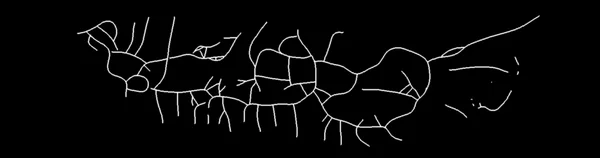
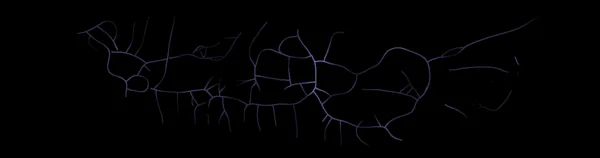
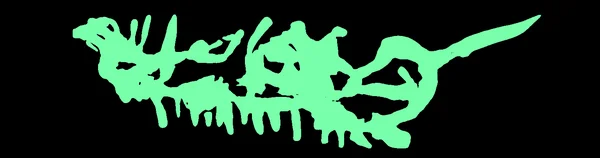
White, blue and green distinguish stages in this process study; they are not the model’s output colours. Model-generated examples, separate from the interactive glyph pool.
The glyphs are pre-generated. Recompose to explore different rhythms within the same collection.
Model-generated glyphs · Not hand-painted by the artist
Explore GeneratorProjects
Where the writing takes place.
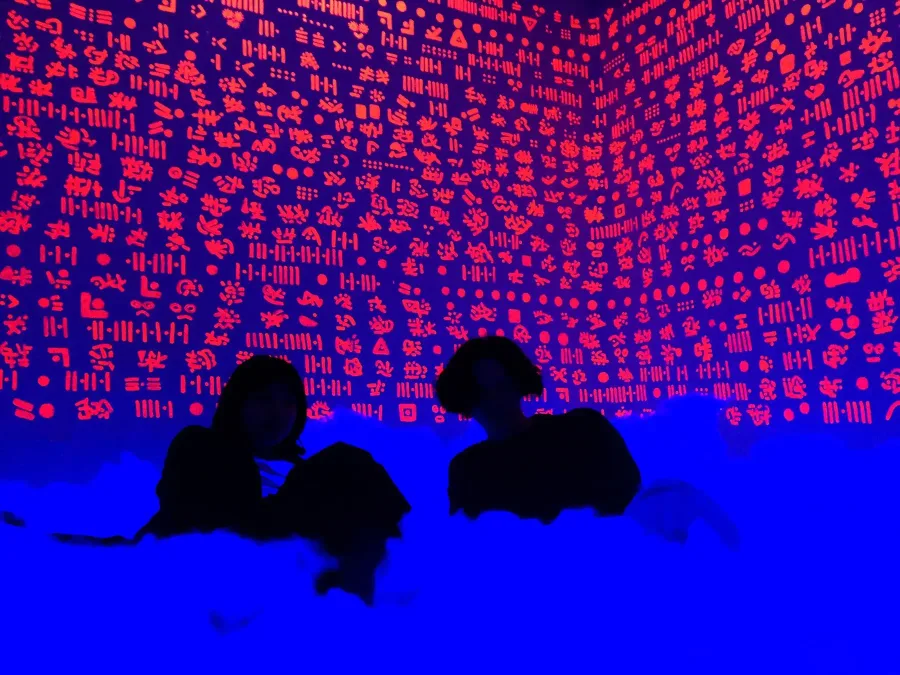
Under Heaven
Chicago, US · SAIC
44 records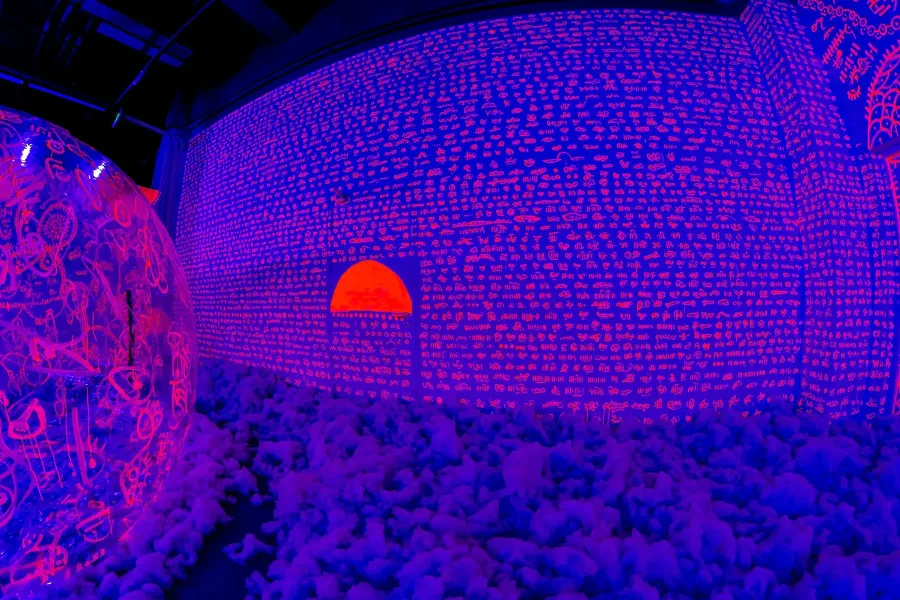
Under Heaven II: Luminous Opera
Coutts Art Center, Shanghai
586 records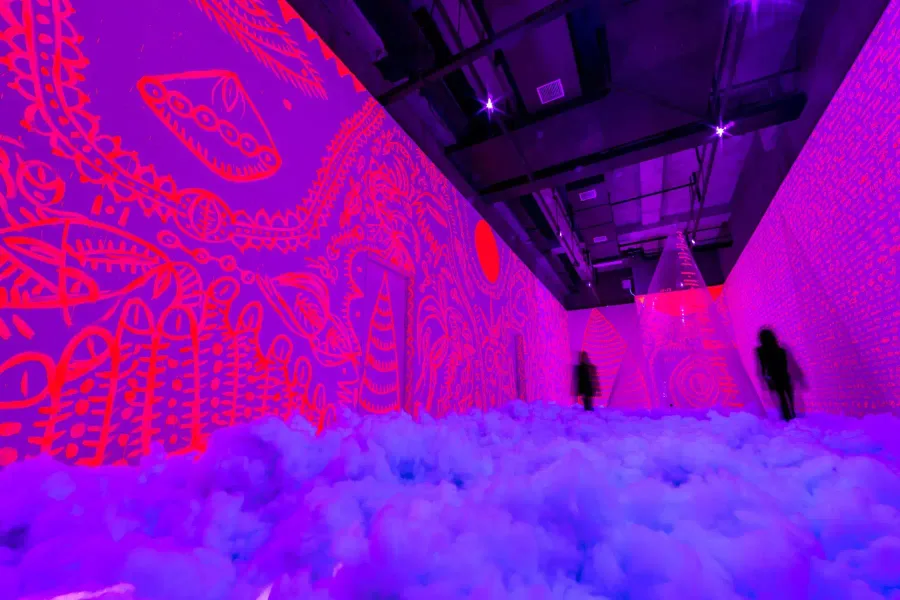
Luminous Opera: Egyselabadi
Haihui Museum of Modern Art, China
457 records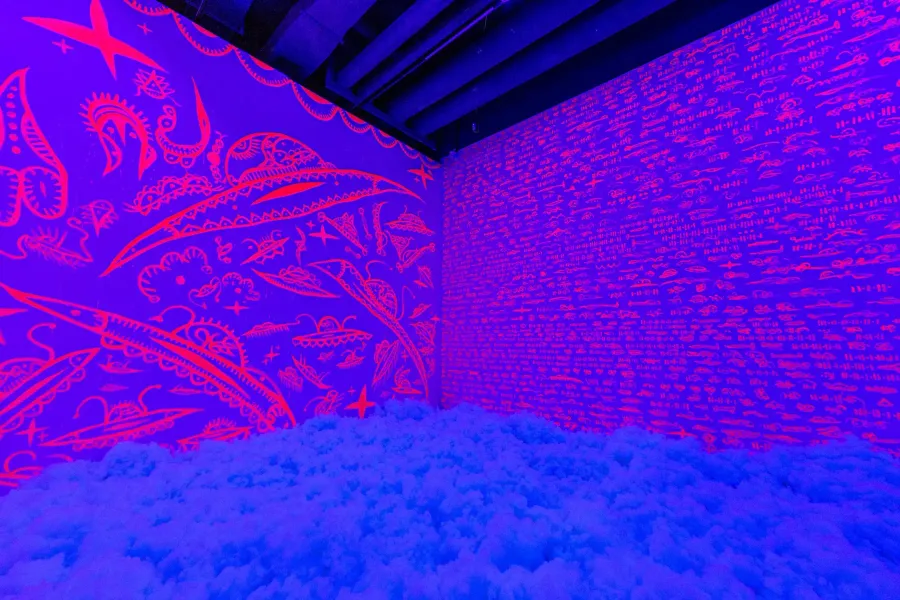
Luminous Opera: The Odyssey
Jupiter Museum of Art
1,831 records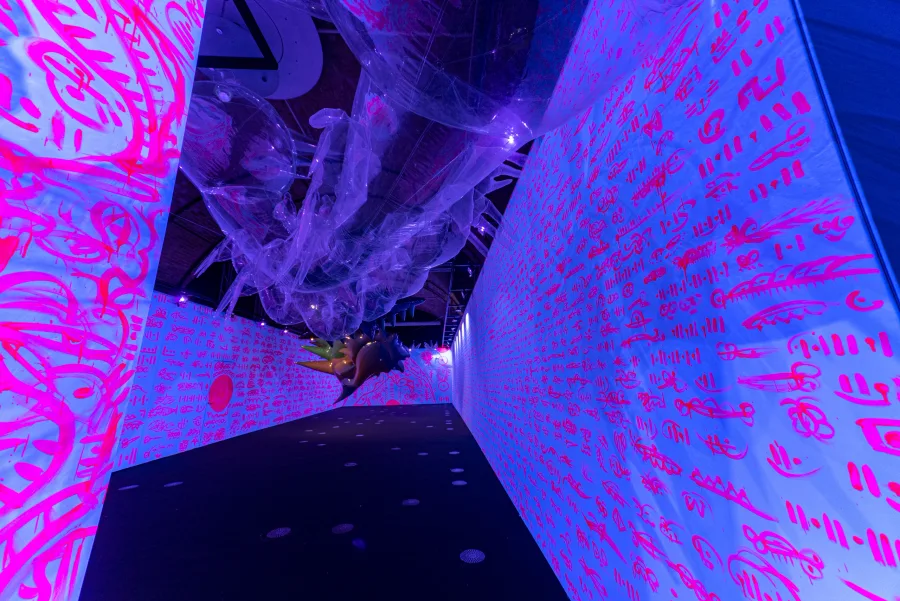
Voyage
Balloon Museum · touring: London, Düsseldorf, Brussels, San Francisco
No catalogued glyphs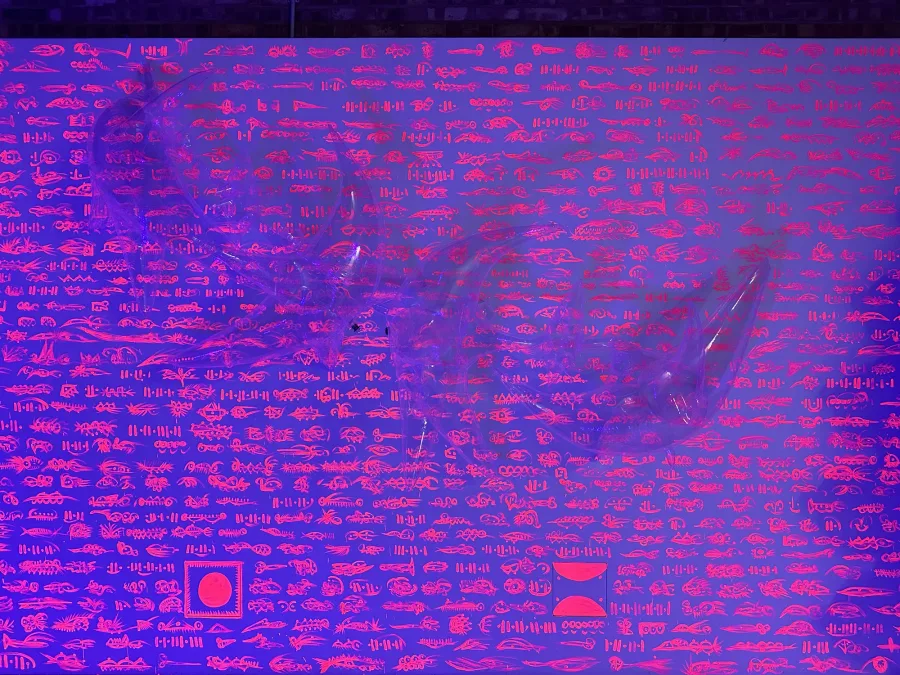
Plop Residency
London, UK
688 records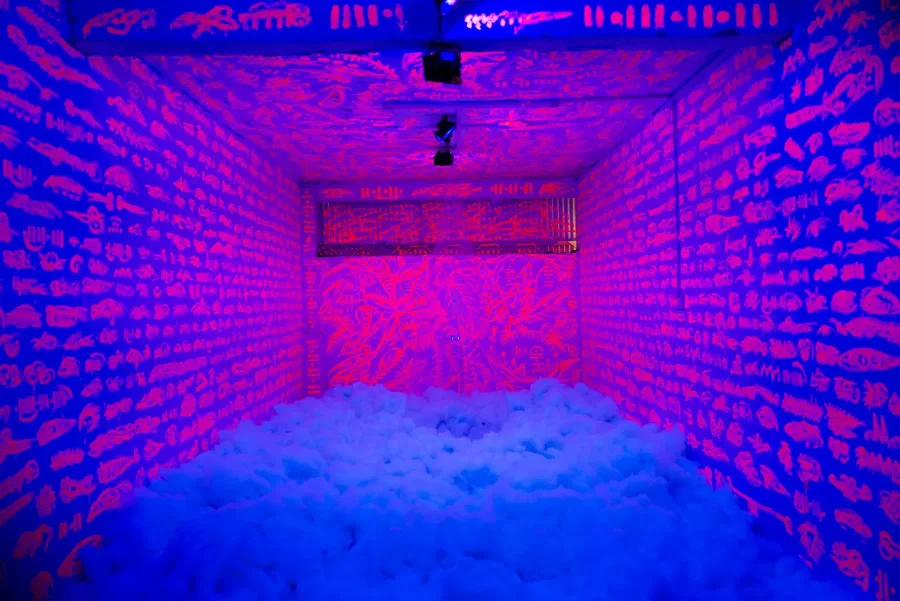
Spectral Opera
T2M Artist Residency · áunn museum & fibre shanghai
640 records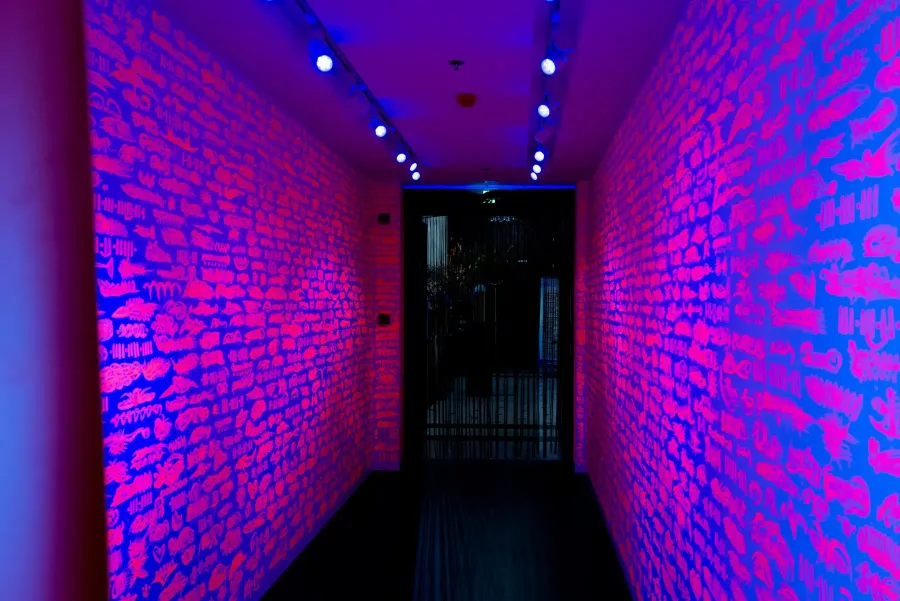
Luminous Opera Corridor Installation
Swatch Flagship Store on the Bund, Shanghai
1,654 records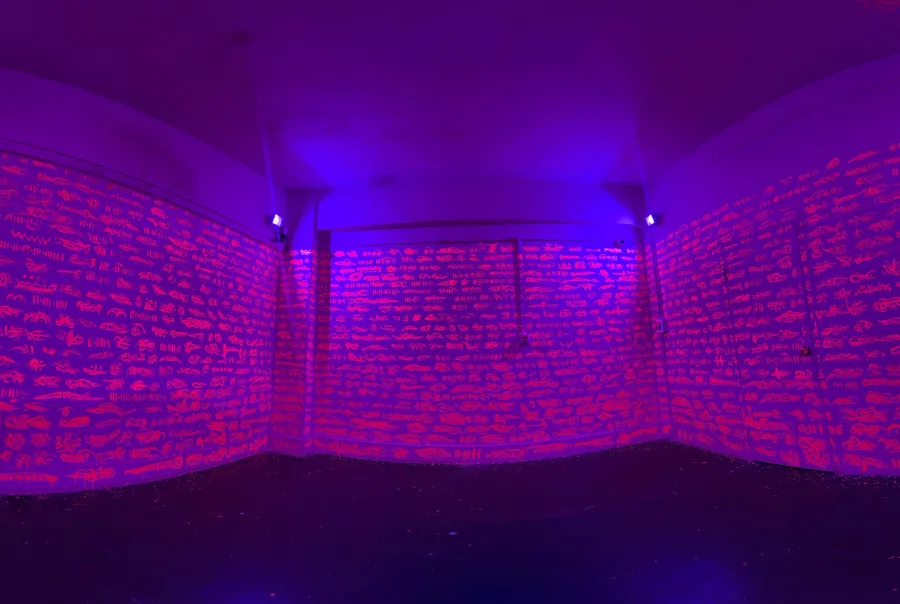
The Studio Wall
The artist’s former studio
4,718 recordsSelected views of the spaces represented in this archive. Full project chronology at kalmanpool.com ↗︎
Artist statement
Kalman Pool · 2026
Luminous Opera is an ongoing practice of invented writing that I began in Chicago in 2015. Developed through site-specific installations, it brings together inscription, speculative life forms and the bodily experience of space. Its evolution is closely connected to my education and movements between cities, as well as to sustained encounters with historical and living writing traditions.
Origins: imagining a form of writing
The earliest inspiration dates to around 2012. When I was sixteen or seventeen, I received Luigi Serafini’s Codex Seraphinianus as a gift. Its invented writing and creatures suggested that an artist could create a world through the relationship between inscription and forms of life. I could not read its characters, yet they possessed a coherent visual order. This encounter led me to consider how forms might communicate feeling without a shared translation.
In 2014, I moved to New York to study at Parsons. I frequently visited the Metropolitan Museum of Art, looking at ancient Egyptian inscriptions, temple architecture and fragments. I became interested in the material presence of writing: how it inhabits a surface, belongs to a place and brings traces of another time into the present. These experiences became an important point of departure for the invention of my own glyphs.
From writing to installation
After entering the School of the Art Institute of Chicago in 2015, I began developing my own pictographic writing. In 2016, these experiments took the form of an installation in Under Heaven. Writing entered a darkened room, where fluorescent paint, ultraviolet light and the movement of visitors became constituent parts of the work. The glyphs acquired a spatial scale, and writing became something that could be experienced from within.
The title Under Heaven arose from my reading of the biblical story of Babel. Construction of the tower is interrupted, and people are divided by language. At the time, I understood this as an image of the human condition: we reach towards heaven while remaining beneath it. The metaphor provided a framework for considering communication and its boundaries in my early work. As the practice developed, I gradually set it aside and turned towards the possibilities for writing offered by each particular site.
View Under Heaven, 2016 ↗︎A pigment, a name
Luminous Opera was originally the colour name of the fluorescent acrylic paint I used. Drawn to the unexpected romance of the name, I adopted it for this ongoing body of work. From the earliest experiments to the present, every glyph in Luminous Opera has been written using this same paint, in the same colour and from the same brand. The forms, locations and scale of the works continue to change, while this material continuity remains.
Under ultraviolet light, the paint gives the marks a presence that depends on darkness to become visible. Writing extends across walls, inflatable sculptures and architectural interiors, changing with distance, light and the position of the viewer. Opera has also come to describe something of the working process: gestures accumulate, repeat and answer one another, allowing the whole to take shape over time. While writing, I often sense a force beyond conscious arrangement, as though the direction of the work reveals itself through the continuation of the act.
Glyphs, bodies and sites
The early characters consisted of dots, vertical lines, counting marks and sequences resembling codes. Over the following decade, they became increasingly complex. My parallel practice in VR sculpture, particularly the creation of creatures and unfamiliar anatomies, continued to enter the writing. Glyphs began to suggest limbs, organs and composite bodies. By the 2025 Swatch corridor installation, many characters had acquired a distinctly creature-like appearance, bringing writing and sculpture into a closer relationship.
Each installation offers an opportunity for reinvention. Architecture, local surroundings and experiences, the surfaces available for writing and the ways a body moves through them all influence the emergence of the glyphs. I enter a place with accumulated experience and adapt it through working on site. Each work inherits certain structures and gestures from earlier works while taking the writing in a new direction.
There is no fixed grammar governing all the characters of Luminous Opera. Certain counting structures follow specific conventions, while the wider field of forms remains open. Relationships between density, interval, direction, repetition and variation establish a visual rhythm. As a work approaches completion, I can judge whether these relationships have found an order. That judgment comes from years of practice and the bodily experience of writing. It cannot readily be reduced to a predetermined set of rules.
Explore the Swatch corridor glyphs ↗︎Perception beyond language
After moving to London to study in 2019, I continued to encounter different traditions of writing and form. I frequently visited the British Museum, with a particular interest in the Rosetta Stone, and explored the forms and histories of life at the Natural History Museum. Later, I travelled to Yunnan to encounter Dongba writing, deepening my interest in the relationships between image, language and cultural memory. These experiences revealed certain affinities between writing traditions while sharpening my attention to their distinct meanings and cultural contexts.
Living and working between Chinese and English has made me conscious of the authority these languages exert over my own expression. Luminous Opera contains a form of resistance to the demand that experience must first be named through existing vocabulary and translated into familiar meanings before it can be communicated. I want to leave room for feelings that have not yet been explained, allowing glyphs to establish a relationship with the viewer through their form, material and rhythm.
There is no concealed message waiting to be deciphered within this writing. I invite viewers to approach it through sensation, intuition and emotion. I sometimes imagine this encounter as a signal from deep within the body, as though it were a memory carried in human DNA. This is a metaphor for perception, for the recognition, attraction or disturbance that visual forms can provoke before conscious understanding. I am interested in how a particular trace might elicit a response across languages, places and times.
The archive and its continuation
The archive makes the development of Luminous Opera available for continued looking and study. It preserves the connection between each glyph and the site of its creation, allowing changes across more than a decade to be traced. This preservation becomes particularly important when the original space can no longer be revisited. The wall of my former studio was written over approximately a year. Since leaving that space, it can now only be approached through its records.
Bringing these records together also places the writing, my sculptural practice and the Creature Archive within a shared artistic context, making their long-standing relationships more visible. In the planned Autogenesis project, glyphs will become starting points for the generation of sculptures, continuing the transformation between written marks and bodily forms. The archive preserves the history of this process while providing a foundation for its development through future sites, encounters and acts of creation.
First draft · September 2026 · Revised as the practice develops